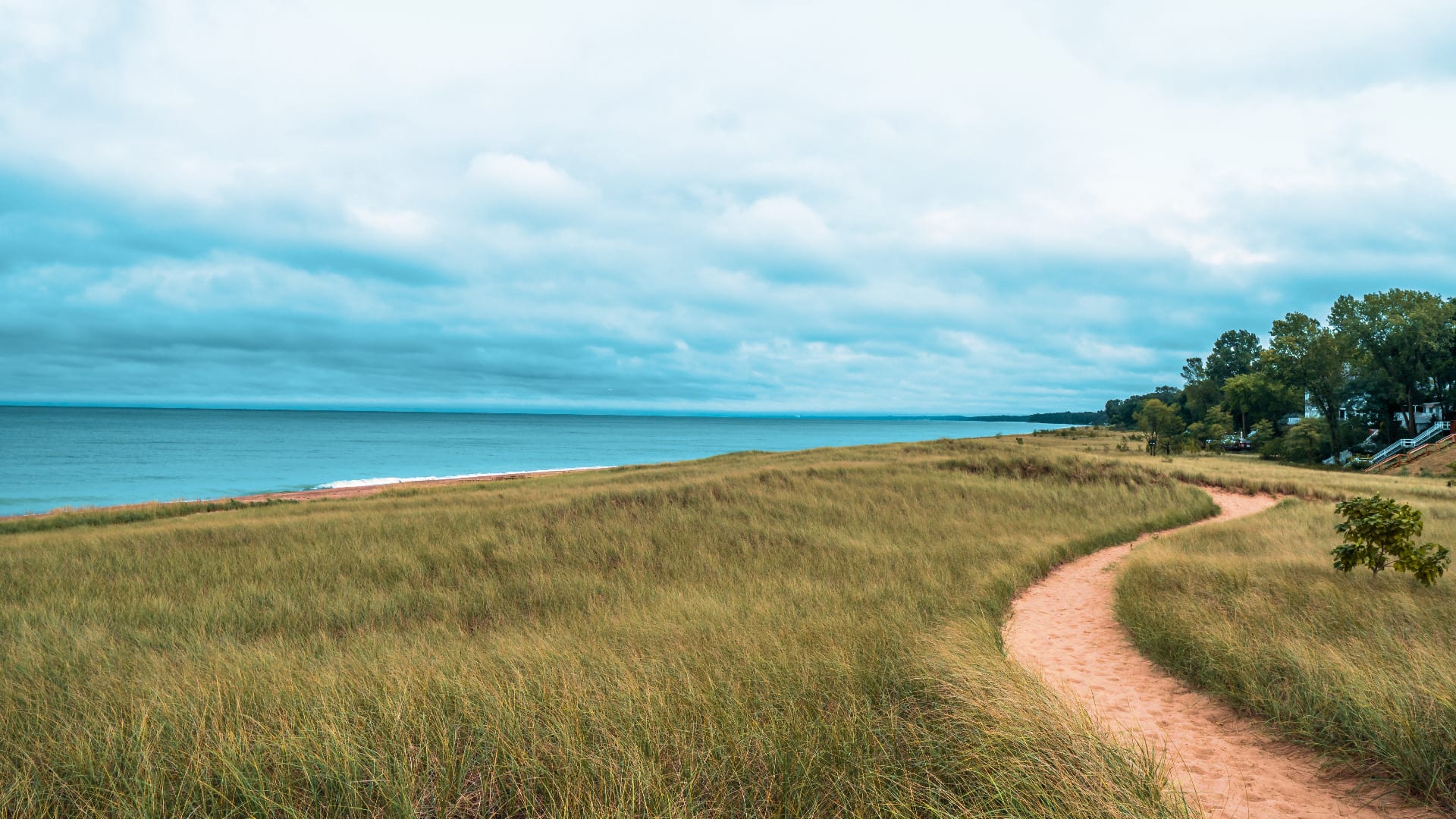
Lake Michigan Shoreline · West Michigan
Lake Michigan Waterfront Homes for Sale
Lake Michigan waterfront homes for sale on the West Michigan lakeshore. Real frontage, high-bank vs. low-bank, erosion & dune rules, with Veronica Parker.
Lake Michigan Shoreline · West Michigan
Lake Michigan waterfront homes for sale on the West Michigan lakeshore. Real frontage, high-bank vs. low-bank, erosion & dune rules, with Veronica Parker.
Mason · Oceana · Manistee
Primary Counties
Lake Michigan & Inland
Frontage
Premium / Luxury
Segment
Ludington · Pentwater · Arcadia
Shore Towns
True Lake Michigan frontage is the rarest property type on the West Michigan lakeshore, and not every listing that says "waterfront" actually has it. Genuine frontage runs along the open Great Lake — from Ludington and Pentwater up through Arcadia, Onekama, and Manistee — and it trades at a steep premium over inland-lake, river, and Lake Michigan-view homes. Much of what comes up for sale instead fronts Portage Lake, Hamlin Lake, Pere Marquette Lake, or one of the smaller inland lakes, which is wonderful water but a different market entirely. As a licensed appraiser, the first thing I do on any "waterfront" listing is verify exactly what the deed and survey describe before we ever talk price.
The single biggest factor in how a Lake Michigan home lives is bank height. Low-bank lots sit close to the water with walk-out or near-walk-out beach access — the most coveted and most expensive configuration, and the one most exposed to wave energy. High-bank and bluff lots sit atop dramatic dunes, sometimes 50 to 100-plus feet up, with sweeping views and a long stairway down to the sand. Inspiration Point near Arcadia is often called the highest bluff on Lake Michigan's west coast. Those stairs are a real cost to budget for: they take storm and ice damage, need permits to rebuild, and replacement can run into five figures. I help buyers weigh view-and-privacy against day-to-day beach access honestly, because the trade-off is permanent.
Lake Michigan is not a static shoreline. Levels climbed from 2014 and set records in 2020, and one study measured shoreline recession of roughly 20 to 62 meters at eleven Lake Michigan beaches between 2013 and 2020. Michigan's EGLE maps roughly 250 miles of Great Lakes shore as High Risk Erosion Areas — those receding a foot or more per year — where new structures face 30-year and 60-year construction setbacks measured from the erosion hazard line. Critical Dune Area parcels need an EGLE permit for almost any activity, including tree removal. With my title and abstracting background, I check HREA and critical-dune status, recorded seawall or revetment permits, and bluff history before you fall for the view.
Frontage rarely hits the open market and often sells quietly, so I set up a targeted search and tap local relationships to surface the right parcels before they spread to the big portals. We talk budget, year-round versus seasonal use, and exactly how much bank, beach, and stair you actually want. Because I'm both a licensed appraiser and have worked in title, I read these deals differently than most agents: I confirm true Lake Michigan frontage, verify riparian boundaries and any deeded or shared access, flag erosion and dune regulations, and tell you when a price is real. Reach out for a free, no-pressure conversation about owning a piece of the shore.
Frequently Asked Questions
True Lake Michigan frontage is a premium, luxury-tier segment, and prices swing widely with bank height, beach quality, lot width, and town. A low-bank walk-out parcel in a desirable stretch commands far more than a high-bluff lot with a long stairway, and both sit well above inland-lake or Lake Michigan-view homes nearby. I won't quote you a single regionwide "median," because that number would be misleading across Mason, Oceana, and Manistee counties — frontage is too scarce and too varied. What I will do is pull genuine recent frontage sales that match the bank type and town you're targeting, so you're comparing like to like before you write an offer.
Low-bank lots sit close to the water with easy, often walk-out, beach access — the most coveted and priciest setup, and also the most exposed to waves and high-water years. High-bank and bluff lots sit atop the dunes, sometimes 50 to 100-plus feet up, trading effortless beach access for big views, more privacy, and a long stairway to the sand. Arcadia's Inspiration Point is regularly cited as the highest bluff on the lake's west coast. Neither is "better" — it depends on how you'll actually use the place. I walk buyers through the real day-to-day trade-offs, including what those stairs cost to maintain and rebuild.
It's something to underwrite, not fear. Lake levels rose sharply from 2014 and peaked at records in 2020, and research measured significant beach and bluff recession around the Great Lakes during that stretch — at eleven study beaches, shoreline pulled back roughly 20 to 62 meters between 2013 and 2020. Levels have since come down from those highs, but the cycle is real. Before you buy, I look at the bluff's history, any existing seawall or revetment and whether it was properly permitted, and how far the home sits from the bank. My appraisal and title background means I treat erosion as a measurable risk we can price, not a deal-killer or an afterthought.
Michigan's EGLE designates roughly 250 miles of Great Lakes shore as High Risk Erosion Areas — those receding a foot or more per year. In an HREA, a permit is required for nearly any permanent structure, and setbacks apply: a 30-year setback for smaller, movable structures and a 60-year setback for larger buildings and septic systems, measured from the erosion hazard line. If the parcel is in a Critical Dune Area, you'll need an EGLE permit for almost anything, including removing trees. These rules can limit additions, new garages, and even decks. I confirm a property's HREA and critical-dune status up front so there are no surprises after closing.
Yes, within limits, and it surprises a lot of buyers. Michigan's Supreme Court ruled in Glass v. Goeckel (2005) that the public trust doctrine lets people walk the Great Lakes shoreline below the ordinary high-water mark, even across privately owned land. You can own land down to the water's edge, but that wet-sand strip stays open for walking, fishing, and navigation. It's not a public picnic ground, and it isn't a right to come up onto your lawn — but it does mean the beach itself isn't exclusively yours. With my title background, I make sure buyers understand exactly where their private rights begin and end before they buy.
Across Mason, Oceana, and Manistee counties — think Ludington, Pentwater, Arcadia, Onekama, and Manistee — but genuine open-lake frontage is scarce and turns over slowly. Many listings labeled "waterfront" actually front inland lakes like Hamlin, Portage, or Pere Marquette Lake, which is great water but a different price and lifestyle. The best frontage often sells quietly through local relationships before it ever reaches Zillow. That's where having an agent rooted on the lakeshore matters: I set up a precise search, lean on local connections, and verify true Lake Michigan frontage on the deed so you don't waste time on listings that only borrow the word.
More than the view. I verify that the deed actually conveys Lake Michigan frontage and where the riparian boundaries fall, then check HREA and critical-dune status, any recorded seawall or revetment permits, and the bluff's erosion history. On the home itself, beach stairs, the septic and well systems, and insurance availability and cost all deserve a hard look on lakeshore property. Shared or deeded access arrangements and any association rules matter too. Because I'm a licensed appraiser who has worked in title, I run these checks as a matter of habit — and I'd rather find a problem during due diligence than have you discover it the first stormy spring.
Thinking About Lake Michigan Waterfront?
Tell Veronica what you're looking for and she'll send current listings, recent sales, and honest local guidance for Lake Michigan Waterfront.
Call, text, or message Veronica today for current Lake Michigan Waterfront listings and a no-pressure conversation.

Veronica Parker at Vylla Homes is dedicated to helping clients buy and sell homes with confidence. With deep local market knowledge and a commitment to excellence, she delivers outstanding results.
41000 Woodward Ave., Ste 350
East Bloomfield Hills, MI 48304
License: 6501381580
We are pledged to the letter and spirit of U.S. policy for the achievement of equal housing opportunity throughout the Nation. We encourage and support an affirmative advertising and marketing program in which there are no barriers to obtaining housing because of race, color, religion, sex, handicap, familial status, or national origin. Equal Housing Opportunity.
© 2026 Veronica Parker - Vylla Homes. All rights reserved.
Powered by RealSavvy