West Michigan Living
Ludington State Park: A Complete Guide
A local's guide to Ludington State Park, MI: Lake Michigan and Hamlin Lake beaches, Big Sable Point Lighthouse, trails, paddling, dunes, and camping.
West Michigan Living
A local's guide to Ludington State Park, MI: Lake Michigan and Hamlin Lake beaches, Big Sable Point Lighthouse, trails, paddling, dunes, and camping.
Frequently Asked Questions
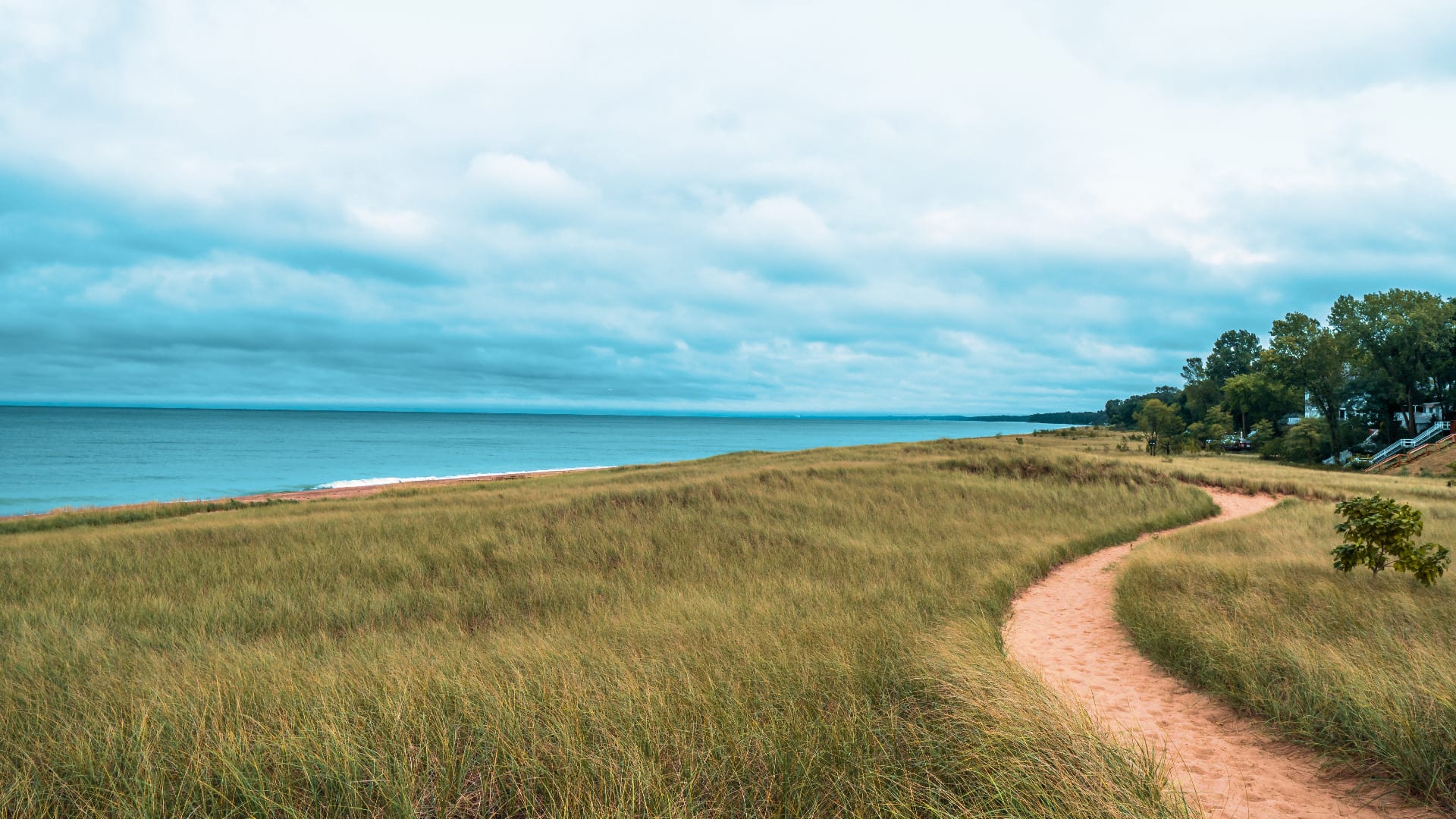
Ludington State Park is one of West Michigan's crown jewels, tucked along the lakeshore just north of downtown Ludington. What makes it so special is its location on the narrow strip of land between two very different bodies of water: roughly seven miles of Lake Michigan shoreline on one side and the sprawling 5,000-acre Hamlin Lake on the other. In between you get rolling sand dunes, hardwood forest, marshland, and the Big Sable River winding through the middle. There are eighteen-plus miles of marked trails, three modern campgrounds, the historic Big Sable Point Lighthouse, and a seasonal visitor center. As someone who sells homes up and down this lakeshore, I tell almost every buyer to spend a day here before they commit, because it really captures what living near Ludington feels like.
The park gives you two completely different beach days in one place. The Lake Michigan side is the dramatic one, with miles of soft sugar sand, open horizon, and the wave action the big lake is famous for, so it's wonderful for sunset watching and wave-jumping but the water runs cold and the surf can pick up. This is also where you'll find the historic beach house, with restrooms, concessions, and a seasonal interpretive area inside. The Hamlin Lake side is the family-friendly counterpart: the water is calmer and tends to warm up much sooner in the season, the shoreline is sandy and gradual, and there's a playground and a picnic area nearby. When clients ask me where to take little kids, I point them to Hamlin. When they want that classic Lake Michigan postcard moment, I send them to the big-lake beach.
You can, and it's one of my favorite things to recommend. The Big Sable Point Lighthouse is the tall black-and-white striped tower that rises about 112 feet over the Lake Michigan shoreline, and it's been beautifully restored over the years. Here's the catch that surprises first-timers: there's no road to it. You reach the lighthouse on foot or by bike along a sand-and-gravel pathway that runs roughly 1.8 miles one way through the dunes and grasses, which makes arriving feel like a real accomplishment. It's open seasonally, generally from late spring into fall, and on tour days you can climb to the top for a sweeping view of the lake and the dunes. Wear good shoes, bring water, and give yourself plenty of time for the walk out and back.
The trail network is genuinely one of the best on the West Michigan lakeshore. There are eight separately marked foot trails covering more than eighteen miles, and because they thread through dunes, forest, riverbank, and lake edge, no two feel the same. The Skyline Trail is the showstopper for many visitors: it's a short elevated boardwalk that runs along the crest of a dune ridge, with overlooks that take in Lake Michigan on one side and Hamlin Lake on the other. The Ridge Trail rewards you with terrific views toward the lighthouse and the big lake, and the Lost Lake Trail is an easier loop around a quiet cove off Hamlin. There are kiosks and a printable map at the trailheads, so it's easy to match a route to your energy level and how much time you have.
Paddling might be the single best way to experience the park. There's a marked canoe trail that starts near the Hamlin Lake concession area and winds for several miles along the lake past marshy edges where you'll often spot herons, turtles, and other wildlife. It's a peaceful route, though a few stretches pass through shallow marsh that can call for short portages, so be ready to step out and carry your boat a little. You don't have to bring your own gear, either: there's seasonal rental of canoes, kayaks, paddleboards, rowboats, and paddleboats right at the Hamlin Lake concession area. For something more playful, you can also float the short stretch of the Big Sable River by tube or kayak as it runs down toward Lake Michigan.
Ludington State Park has three modern campgrounds, named Pines, Cedar, and Beechwood, with several hundred sites between them plus a handful of mini-cabins for folks who'd rather not pitch a tent. The campgrounds offer electric sites and modern restroom and shower facilities, and they're connected to the beaches, day-use areas, and visitor center by a paved trail that's great for walking or biking. Because this is one of Michigan's most beloved parks, the summer sites book up far in advance, so if you're picturing a warm-weather camping trip you'll want to plan well ahead rather than count on a last-minute opening. For my buyers weighing a move to the area, the campgrounds are a fun, low-cost way to test out a few seasons here before they buy.
Absolutely worth it. The dunes are a defining feature of the park, part of the larger freshwater dune system that makes this stretch of Lake Michigan shoreline so distinctive. They range from open, windswept sand to dunes anchored by beach grass and pockets of forest, and the best way to take them in without trampling the fragile vegetation is from the boardwalks and marked trails. From the elevated overlooks along the Skyline Trail you can see for miles on a clear day, with the dunes rolling toward the water in every direction. It's a landscape that feels surprisingly wild and remote considering how close you are to town, and it's a big part of why people fall in love with the Ludington lakeshore in the first place.
It's a true four-season park, which is one of the things I love about it. Summer is peak season for swimming, paddling, and camping, and the visitor center, beach concessions, and lighthouse tours are all running. Fall brings color through the hardwoods and a salmon run along the river boardwalk that anglers look forward to every year, plus far thinner crowds on the trails. Winter transforms the place entirely: several miles of trails are open for cross-country skiing, with a portion of them groomed, and snowshoeing across the snow-covered dunes is unforgettable. Spring is quieter and beautiful for hiking before the summer rush. So no matter when a client is house-hunting on the lakeshore, I can usually point them to something happening at the park.
For a lot of my buyers, the park is the reason they're looking on this part of the lakeshore at all. Having miles of protected Lake Michigan beach, a 5,000-acre inland lake, dunes, and a full trail system essentially in your backyard is the kind of lifestyle that's hard to put a price on, and it tends to hold value because that natural setting isn't going anywhere. Homes closer to the park and the lake naturally command a premium, while moving a little inland toward Ludington proper or the surrounding townships can stretch your budget while keeping you minutes from the gate. When we sit down, I'll help you weigh how often you'd actually use the park against the trade-offs in price, commute, and year-round versus seasonal living, so you land in the right spot for your life, not just the prettiest listing.
Want to Explore the Lifestyle?
Whether you're researching a move, a vacation home, or just curious, Veronica is happy to talk through what life is like in West Michigan.
Reach out anytime for an unfiltered look at West Michigan from someone who lives and works here.

Veronica Parker at Vylla Homes is dedicated to helping clients buy and sell homes with confidence. With deep local market knowledge and a commitment to excellence, she delivers outstanding results.
41000 Woodward Ave., Ste 350
East Bloomfield Hills, MI 48304
License: 6501381580
We are pledged to the letter and spirit of U.S. policy for the achievement of equal housing opportunity throughout the Nation. We encourage and support an affirmative advertising and marketing program in which there are no barriers to obtaining housing because of race, color, religion, sex, handicap, familial status, or national origin. Equal Housing Opportunity.
© 2026 Veronica Parker - Vylla Homes. All rights reserved.
Powered by RealSavvy